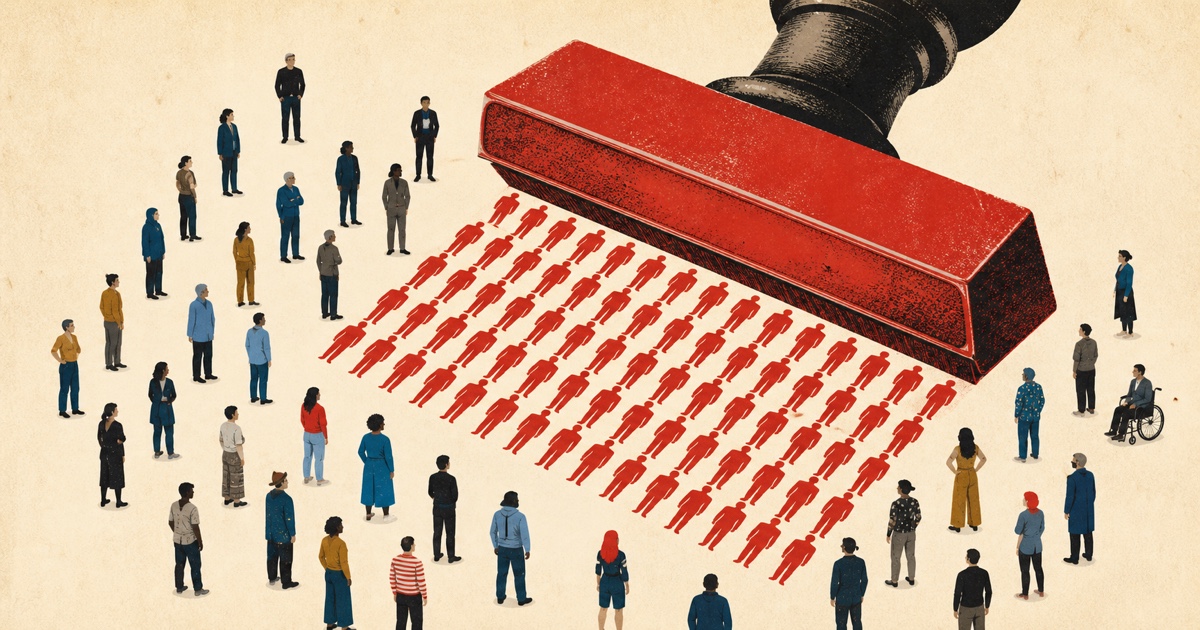
The political divide that may come to define our time is not left versus right, but pluralism versus populism. Pluralism starts with a simple idea: no person or movement speaks for everyone, so power must be shared and disagreement must remain legitimate. By pluralism I do not mean moderation or compromise for its own sake. Sometimes compromise is the wrong thing. You can want enormous change and still be a pluralist. What matters is whether you regard the people standing in your way as members of the same democratic community, and whether you remain capable of accepting facts even when they come from someone you dislike.
Populism is not simply anger at elites or distrust of the establishment. Both can be democratic, and both can be deserved. The defining move is the claim that one movement, and only that movement, morally represents the real people. Its opponents are then not merely wrong but corrupt, fraudulent, or somehow not full members of the political community. Once a movement decides that only corrupt people disagree, it has made itself incapable of learning. It takes a real problem, blames it on a villain, and mistakes defeating the villain for an implementation plan. Tradeoffs become excuses, expertise becomes propaganda, and institutions become obstruction. The movement no longer has to ask whether its plan works, only whether it has been pure and forceful enough. Populism becomes a refusal of reality.
The DSA is a clear example of this on the left. Its 2026 program endorses proportional representation, ranked-choice voting, and a multiparty system—genuinely pluralist reforms. But it also describes both major parties as funded by “the same criminal class of billionaires and war profiteers” and identifies “the entire global system of capital” as an enemy. Its national co-chairs reduce the argument to “workers over billionaires.” Almost no one is going to say that billionaires should come before workers. The slogan’s real work is to assume that the DSA speaks for workers. Yet its own member survey found that the people over age 25 who responded were overwhelmingly college-educated. College graduates are workers too, but a highly educated political organization is not the working class itself. Once a movement identifies itself with workers, its policies start to look less like political choices with real costs and more like taking back what was stolen. That framing can mobilize supporters, but it also makes compromise look like betrayal and any resulting harm easier to dismiss.
The DSA’s proposals for a 32-hour workweek at full pay, rent freezes, and public ownership all respond to real problems, and each may make sense in some form. But the program mostly skips from the problem to the desired result. A shorter workweek does not explain how a hospital covers its shifts; a rent freeze does not lower the cost of maintaining an apartment building; and public ownership risks putting the government on both sides of the table—as owner and regulator—which can weaken competition and innovation while shielding a company from the consequences of failure. The point is not that every version of these ideas is wrong. It is that governing means explaining where a policy works, who bears its costs, and what happens when it fails. Without those answers, a list of benefits is not a plan.
Police abolition belongs to a different debate. Its connection to those economic proposals comes less from a common theory of government than from a political coalition assembled through social media: workers, tenants, and marginalized groups are cast as “us,” while bosses, landlords, billionaires, and police are cast as “them.” These causes address different problems and require different solutions, but a shared enemy makes the platform feel coherent. That can build a committed coalition, but it does not make a governing program. I consider myself a liberal, and I share some of the DSA’s goals. But a serious agenda has to rank those goals, explain how its policies work, and admit when its aims conflict. It is one thing to describe a just society. It is quite another to show how we get there.
MAGA shows where this can go. It is less a governing coalition than a personality cult organized around grievance. Donald Trump promised to “tariff and tax foreign countries to enrich our citizens.” In reality, American importers pay the duty, and Federal Reserve researchers found that the tariffs raised consumer prices. Tariffs can serve strategic purposes; protecting a supply chain may justify the cost. That is different from promising they will make foreigners pay, revive manufacturing, raise revenue, and lower prices at once. Grievance comes first. Policy becomes retaliation, only loosely connected to the problem it claims to solve.
With MAGA, the progression is not hypothetical. Grievance became loyalty to one person; Trump’s loss in 2020 became fraud; and the fraud story became January 6. The DSA has not crossed that Rubicon, and I am not predicting that it will. The point is not that the two movements have done the same things. It is that the DSA echoes part of the same logic when it casts itself as the voice of workers, describes the major parties as funded by a “criminal class,” and treats practical objections as moral offenses. A movement that assumes it alone represents the people will struggle to admit it was wrong, because failure can always be blamed on enemies. The DSA should get serious before grievance makes anything short of total victory feel illegitimate.
I am vegan. I believe meat is murder, and I think everyone should be vegan. Yet I know kind and thoughtful people who may never change. This paradox makes me think about Camus and absurdism. My certainty does not tell me how to abolish animal agriculture, what happens to the farmers and workers, how quickly food systems can change, or what kinds of coercion are justified. Those questions do not excuse killing animals or make change less urgent. They are the difference between a moral judgment and a theory of government. Pluralism does not make me less certain that I am right. It forces me to admit that being right does not mean I know everything.
Pluralism is not “live and let live.” It is the discipline required to govern reality. A serious movement has to name the costs of its policies, identify the people who will lose, explain who will administer them, anticipate how people will respond, and say what evidence would make it change course. The opposition is not just something to tolerate. Sometimes it is the only thing telling you what your plan will break. MAGA is what this failure looks like on the right. The left is not exempt just because the people it means to help are more sympathetic. No movement gets to declare itself “the people.” Good intentions do not prevent bad results. Any movement that cannot say what would prove it wrong should not be trusted with the power of government.